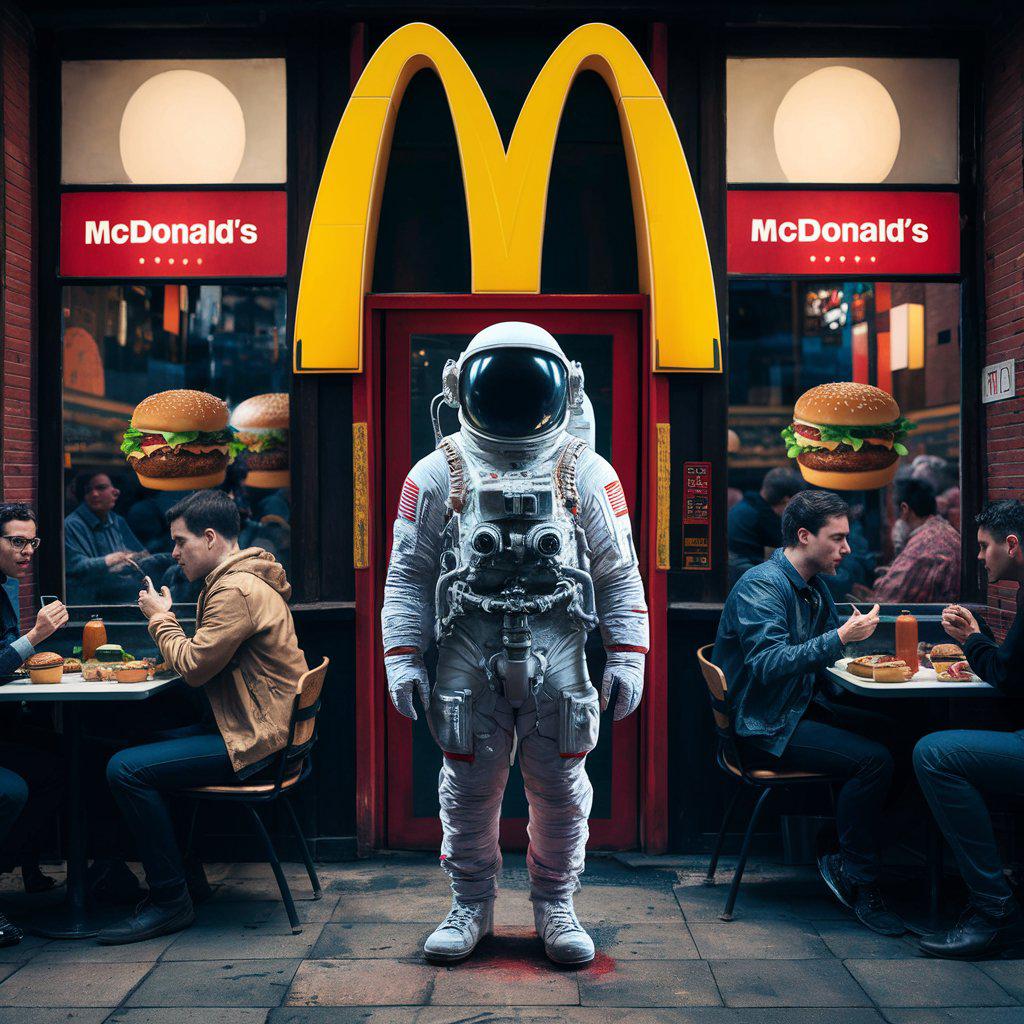
In 1940, Richard and Maurice McDonald opened a small drive-in restaurant in San Bernardino, California. The McDonald brothers initially ran their restaurant as a traditional carhop, where customers parked their cars and were served by waiters. However, they soon realized that the growing demand for fast and efficient service required a different approach. In 1948, they reinvented their business by introducing the "Speedee Service System," which focused on delivering food quickly. This system emphasized a limited menu of items prepared in advance and kept warm under heat lamps. It was the beginning of the fast-food concept as we know it today.
The turning point for McDonald's came in 1954 when Ray Kroc, a Multimixer milkshake machine salesman, visited the McDonald brothers' restaurant. Impressed by their efficiency and popularity, Kroc saw an opportunity to franchise the concept nationwide. He partnered with the McDonald brothers, and in 1955, he opened the first McDonald's franchise in Des Plaines, Illinois.
Kroc's vision extended beyond a single restaurant. He focused on standardizing the menu, operations, and brand, which allowed McDonald’s to maintain consistency across all locations. By 1961, Kroc bought out the McDonald brothers for $2.7 million, securing full control of the company. Under his leadership, McDonald's grew rapidly, expanding not only across the United States but also internationally.
Today, McDonald’s operates over 38,000 restaurants in more than 100 countries, serving millions of customers daily. The company has become a symbol of globalization and American culture. The success of McDonald's lies in its ability to adapt to changing consumer preferences while maintaining its core principles of speed, convenience, and affordability.
Teaching Point:
The story of McDonald’s teaches us the importance of innovation and adaptability in business. By recognizing the need for change and embracing new ideas, the McDonald brothers and Ray Kroc turned a small drive-in into a global empire.
Comprehension Questions
- What was the original concept of the McDonald brothers' restaurant?
- How did the McDonald brothers revolutionize the fast-food industry?
- Who played a crucial role in franchising McDonald's nationwide?
- What were the key factors that contributed to McDonald's global success?
- What can we learn from the story of McDonald's?
Open-ended Questions
- How has McDonald's influenced global food culture and consumer behavior?
- What are the potential negative consequences of the fast-food industry, such as health concerns and environmental impact?
- How can companies like McDonald's balance profitability with social responsibility?
Vocabulary and Expressions
- Drive-in: A restaurant where customers can be served in their cars.
- Carhop: A waiter who serves customers in their cars.
- Reinvent: To create or develop something new from something old.
- Franchise: A business authorized to sell a company's products or services under a licensing agreement.
- Standardize: To make things consistent or uniform.
- Global empire: A large, powerful organization operating in many countries.
- Adaptability: The ability to adjust to new situations.
- Core principles: The fundamental beliefs or values of an organization.
- Efficiency: The ability to accomplish a task with the least amount of effort.
- Innovation: The introduction of new ideas, methods, or products.
- Consumer preferences: The likes and dislikes of customers.
- Globalization: The process of becoming worldwide in scope or operation.
- Cultural impact: The effect of one culture on another.
- Economic influence: The power to affect the economy of a region or country.
- Brand recognition: The ability of a brand to be recognized and remembered by consumers.